
Sustainability · 2025
In this section49 topics
- Sustainability Policy2 items
- Sustainability Goals & UN SDGs3 items
- Policy Review3 items
- Business Value Chain1 item
- Stakeholder Analysis1 item
- Environmental Policy & Guidelines5 items
- Environmental Policy Review3 items
- Energy — Plan & Guidelines2 items
- Energy — Electricity Consumption1 item
- Energy — Fuel Consumption1 item
- Energy — Targets2 items
- Energy — Performance & Outcomes2 items
- Water — Plan & Guidelines2 items
- Water — Withdrawal, Discharge & Consumption1 item
- Water — Targets2 items
- Water — Performance & Outcomes1 item
- Waste — Plan & Guidelines2 items
- Waste — Generation, Disposal & Recycling1 item
- Waste — Targets1 item
- Waste — Performance & Outcomes2 items
- GHG — Plan & Guidelines1 item
- GHG — Emissions1 item
- GHG — Emissions Verification1 item
- GHG — Targets1 item
- GHG Targets — Carbon Neutrality1 item
- GHG — Performance & Outcomes1 item
- Environmental Legal Incidents1 item
- Other Environmental Management1 item
- Social Policy & Guidelines3 items
- Social Policy Review1 item
- Social — Principles & Standards Practised1 item
- Human Rights Due Diligence1 item
- Employees — Plan & Guidelines3 items
- Employees — Workforce2 items
- Employees — Remuneration & Provident Fund1 item
- Employees — Training & Development1 item
- Employees — Occupational Health & Safety2 items
- Employees — Labour Relations1 item
- Employees — Employee Representation2 items
- Employees — Targets1 item
- Employees — Performance & Outcomes2 items
- Customers — Plan & Guidelines3 items
- Customers — Satisfaction Results2 items
- Customers — Targets2 items
- Customers — Performance & Outcomes2 items
- Community & Social — Plan & Guidelines4 items
- Community & Social — Targets2 items
- Community & Social — Performance & Outcomes2 items
- Law Violation Incidents1 item
Sustainability Policy
Has a Sustainability Policy
Yes
Policy Description
With over 38 years of experience in the animal feed production and distribution industry, PP Prime Public Company Limited and its subsidiary, Thai Luxe Enterprise (Thailand) Co., Ltd., continue to create positive change and shared value for our customers, partners, employees, and shareholders. Our ultimate goal is to achieve Sustainable Economic Growth while prioritizing community and environmental development.
We recognize the vital link between animal feed quality, food safety, and environmental stewardship. Through our “Sustainable Animal Welfare” approach—a strategic turning point in our sustainability journey—we strive to:
Enhance production efficiency.
Reduce energy consumption and greenhouse gas emissions.
Uphold ethical business practices and the well-being of all stakeholders.
Our commitment extends to shaping a better future for the youth and local communities through consistent, tangible, and sustainable Corporate Social Responsibility (CSR) projects. These initiatives are aligned with the United Nations’ Sustainable Development Goals (SDGs), covering the three ESG pillars: Environment (E), Social (S), and Governance & Economic (G).
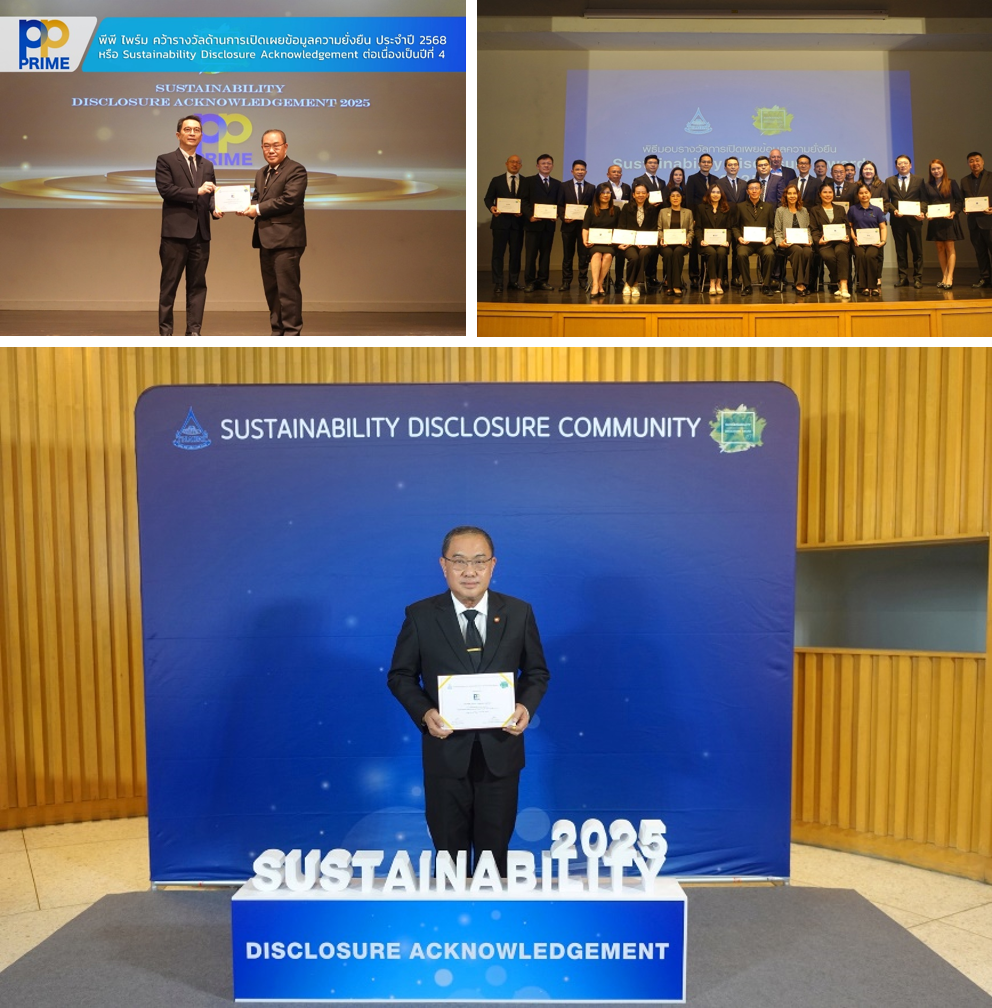
Award & Recognition: Sustainability Disclosure Acknowledgement 2025
For the fourth consecutive year, PP Prime Public Company Limited has been honored with the Sustainability Disclosure Acknowledgement award from the Thaipat Institute.
The Award Presentation:
Recipient: Lt.Gen. Krisana Waropas, Chairman of the Board and Chairman of the Sustainability Committee.
Presenter: Dr. Phiphat Thaiyodthitiwat, Chairman of the Thaipat Institute.
Date & Venue: Tuesday, November 25, 2025, at the Auditorium, 5th Floor, Bangkok Art and Culture Centre (BACC).
PP Prime Public Company Limited ensures that its sustainability reporting is transparent and beneficial to all stakeholders. This achievement reflects our contribution toward SDG Target 12.6, encouraging companies to integrate sustainability information into their reporting cycle. PPPM and Thai Luxe Enterprise (Thailand) Co., Ltd. remain steadfast in our mission to develop the organization toward long-term sustainability under the principles of Good Corporate Governance.
Sustainability Goals & UN SDGs
Has Sustainability Goals
Yes
Goals Description
The Company has integrated the United Nations Sustainable Development Goals (SDGs), a globally recognized framework for international development, as a core principle for its business operations. This commitment extends to the implementation of various projects and activities across PP Prime Public Company Limited and its subsidiaries.
UN Sustainable Development Goals
| SDG Goal |
|---|
| Goal 3 Good Health and Well-being |
| Goal 3 Good Health and Well-being |
| Goal 4 Quality Education |
| Goal 4 Quality Education |
| Goal 6 Clean Water and Sanitation |
| Goal 6 Clean Water and Sanitation |
| Goal 8 Decent Work and Economic Growth |
| Goal 8 Decent Work and Economic Growth |
| Goal 10 Reduce Inequalities |
| Goal 10 Reduce Inequalities |
| Goal 11 Sustainable Cities and Communities |
| Goal 12 Responsible Consumption and Production |
| Goal 12 Responsible Consumption and Production |
| Goal 13 Climate Action |
| Goal 15 Life on Land |
| Goal 16 Peace, Justice and Strong Institutions |
| Goal 16 Peace, Justice and Strong Institutions |
| Goal 17 Partnerships for the Goals |
| Goal 17 Partnerships for the Goals |
Policy Review
Policy Reviewed This Year
Yes
Policy Changed This Year
Yes
Review Details
Corporate Sustainability Goals
Sustainability Goals | Target (%) | |
1 | Implementation of Sustainable Development Operations across all 3 pillars: Environmental, Social, and Governance & Economic (ESG). | 100% |
2 | Overall Performance Assessment in Sustainable Development across all 3 pillars: Environmental, Social, and Governance & Economic (ESG). | Not less than 85% |
Corporate Sustainability Action Plan
Sustainability Action Plan | Frequency | |
1 | Monitoring Sustainability Operations: Track corporate sustainability performance across all 3 ESG pillars (Environmental, Social, and Governance & Economic). Summarize monthly performance for the Sustainability Committee. | Monthly (1 time per month) |
2 | Sustainability Data Management: Manage corporate sustainability data across the 3 ESG pillars. 2.1 Summarize performance and present reports to the Sustainability Committee. | At least once a year |
2.2 Submit sustainability data to the Company Secretary for the preparation of the 56-1 E-One Report. | Once a year | |
2.3 Disclose and update information on the Corporate Website (Sustainability section) and distribute through internal/external communication channels (Online/Offline). | Upon completion of each activity | |
2.4 Submit data for sustainability assessments or awards in relevant forums (subject to meeting preliminary criteria and considering specific conditions/limitations). | According to the schedule of the organizing entity | |
3 | Report performance results to the Board of Directors. | At least twice a year |
4 | Review and update the Sustainability Committee Charter as deemed appropriate. | Once a year |
5 | Conduct self-assessment of the Sustainability Committee’s performance. | Once a year |
6 | Skill and Potential Development: Participate in projects or activities to enhance the Committee's expertise across the 3 ESG pillars. | At least once a year |
Business Value Chain
Value Chain Description
Managing impact on stakeholders in the business value chain
Stakeholder Analysis
Stakeholder Analysis
| Stakeholder Type | Stakeholders | Stakeholder Expectations | Response to Expectations | Communication Activities |
|---|---|---|---|---|
| External stakeholders | 2923 · Description: Customers | - Trust in the organization. and personnel with expertise
- Standard quality of production and products.
- Fair product prices.
- There are discounts, promotions and credit terms.
- Delivery of products as scheduled.
| •Good Corporate Governance with Transparency, Fairness, and Accountability
•Certified by International Standards: ISO 9001, ISO 14001, ISO/IEC 17025, GMP, and HACCP
•Anti-Corruption and Bribery Policy
•Code of Conduct for Customer Confidentiality
•Customer Relationship Management (CRM)
•Market-Driven Pricing in Alignment with Government Policies
•High-Potential R&D Team meeting diverse customer needs
•Consultative Sales Team and Consistent After-Sales Service
•Product Innovation aligned with current Market Trends
•Business Ethics / Code of Business Conduct
•Protection Policy (PDPA Policy)
•Privacy Notice (for Customers, Partners, and External Visitors) | 2938 · Description: Visit · 2940 · Description: Social Event · 2941 · Description: Online Communication · 2947 · Description: Satisfaction Survey · 2949 · Other name: Annual Dealer Appreciation Event, Participation in Industry Trade Shows and Exhibitions · Description: Others |
| External stakeholders | 2913 · Description: Shareholders | - Improving business performance.
- Good Corporate Governance
- Transparency of information.
| •Disclosure accounting policy and financial reporting
•Transparency and governance. (Corruption prevention
•Investor Relations organizing various meetings on the agenda of relevant significance
•Policy on related party transactions
| 2938 · Description: Visit · 2939 · Description: Press Release · 2940 · Description: Social Event · 2941 · Description: Online Communication · 2944 · Description: Annual General Meeting (AGM) · 2945 · Description: Complaint Reception · 2947 · Description: Satisfaction Survey |
| Internal stakeholders | 2921 · Description: Employees | - Fair compensation and benefits.
- Fair Labor Practices
- Occupational safety, health and working environment
- Career advancement opportunities
| •Human Rights and Fair Labor Practices
•Compensation and Employee Benefits Policy
•Human Resource Development Policy
•Anti-Drug and Substance Abuse Policy
•Information Technology (IT) Security Policy
•Quality Policy
•Environmental Quality Policy
•Occupational Health, Safety, and Working •Environment Policy
•Energy Conservation Policy
•Employment and Labor Management Policy
•White Factory Policy (Drug-Free Workplace Program)
•Inland Information Usage Policy (Insider •Trading Policy)
•Risk Management Policy
•Corporate Governance Policy
•CCTV Privacy Policy
•Smoke-Free Workplace Policy
•Privacy Notice (for Job Applicants and Personnel)
•Provision of Efficient and Sufficient Work Tools and Equipment
| 2941 · Description: Online Communication · 2944 · Description: Annual General Meeting (AGM) · 2945 · Description: Complaint Reception · 2947 · Description: Satisfaction Survey · 2948 · Description: Training / Seminar · 2949 · Other name: Monthly and Quarterly Staff Meetings, Suggestion Boxes, Inquiry and Feedback via Corporate Email, Employee Relations Activities and Seasonal Celebrations (e.g., New Year Party, Songkran Festival), Company Sports Day and Team Building Activities, Employee Engagement and Satisfaction Surveys · Description: Others |
| External stakeholders | 2899 · Description: Suppliers | - Expectations of consistent orders for the company.
- Fair Trade
- Appropriate order quantity
| •Responsible Sourcing (Traceability)
•Business Ethics
•Code of Conduct
•Supplier Audit and Evaluation
•Anti-Corruption and Bribery Policy
•Supplier Procurement Policy
•Purchasing Quality Policy
•Privacy Notice (for Customers, Partners, and External Visitors) | 2938 · Description: Visit · 2940 · Description: Social Event · 2941 · Description: Online Communication · 2943 · Description: External Meeting · 2945 · Description: Complaint Reception · 2947 · Description: Satisfaction Survey |
| Internal stakeholders | 2895 · Description: Migrant workers | - Fair compensation and benefits.
- Fair Labor Practices
- Safety and well-being.
| •Human rights and fair labor practices.
•Personnel Development Policy
•Employment and labor management policy
| 2941 · Description: Online Communication · 2947 · Description: Satisfaction Survey · 2948 · Description: Training / Seminar · 2949 · Other name: Employee Relations Activities and Seasonal Celebrations (e.g., New Year Party, Songkran Festival) · Description: Others |
| External stakeholders | 2902 · Description: Community | - Social and Environmental Responsibility
- Participation in community development.
- Social and economic development.
- Compliance with the law
| •Allocate budget to help. or community development
•Support and participate in operations/activities/projects. for community development
•Implement CSR projects in the dimension of environment and society.
•Carry out community relations projects
•Transparency and governance. (Corruption prevention Disclosure Tax Policy and Reporting)
•Promote labor within the community.
•Strict compliance with environmental laws.
| 2938 · Description: Visit · 2940 · Description: Social Event · 2941 · Description: Online Communication · 2943 · Description: External Meeting · 2945 · Description: Complaint Reception · 2947 · Description: Satisfaction Survey |
| External stakeholders | 2931 · Description: Government agencies and Regulators | - Compliance with the law
- Participation in government projects.
| •Transparency and governance. (Corruption prevention, information disclosure Tax Policy and Reporting)
•No cases of unlawful acts.
•Cooperate with government agencies.
| 2938 · Description: Visit · 2941 · Description: Online Communication · 2945 · Description: Complaint Reception · 2949 · Other name: Active Participation in Government Initiatives and Public Sector Programs · Description: Others |
| External stakeholders | 2929 · Description: Media | - Disclosure of information with transparency.
- Timely disclosure of information.
| •Being an alliance with all relevant media such as finance and investment, feed business, CSR and local media.
•Providing accurate and complete information is an interesting issue. Attract target audience and quickly
| 2938 · Description: Visit · 2939 · Description: Press Release · 2940 · Description: Social Event · 2941 · Description: Online Communication |
Environmental Policy & Guidelines
Introduction
Environmental Quality Policy (ISO 14001:2015)
PP Prime Public Company Limited and its subsidiary, Thai Luxe Enterprise (Thailand) Co., Ltd., are leading manufacturers and distributors of finished animal feed for both domestic and international markets. We have established and implemented a robust corporate quality system to ensure the production of high-quality products that exceed customer expectations. With a steadfast commitment to sustainable business development, we place the utmost priority on environmental preservation and management.
Energy Conservation Policy
Thai Luxe Enterprise (Thailand) Co., Ltd. operates its animal feed business under world-class management standards, including ISO 9001, ISO 14001, ISO/IEC 17025, GMP, and HACCP. We are dedicated to the continuous improvement of our production systems to deliver premium quality products while upholding our core values of social and environmental responsibility. A fundamental pillar of our operations is the strategic focus on energy conservation across all business activities.
Has an Environmental Policy
Yes
Policy Description
Environmental Quality Policy (ISO 14001:2015)
The Company is committed to the following principles:
Strict Legal Compliance: Adhere strictly to all environmental laws, government regulations, and other relevant agreements governing our operations.
Environmental Protection & Pollution Prevention: Focus on protecting the environment and preventing pollution, specifically by reducing waste, conserving energy and resources, and controlling hazardous substances across all corporate activities.
Continuous Improvement: Establish and regularly review environmental objectives and targets to ensure continuous improvement in our environmental performance.
Cultivating Awareness: Instill environmental consciousness among employees, fostering awareness and cooperation in maintaining and complying with the Environmental Management System (EMS).
Communication & Disclosure: Cascade this environmental policy to all employees at every level and make it available for public disclosure.
Energy Conservation Policy
The Company establishes this policy as a guideline for energy operations, promoting maximum efficiency and benefit as follows:
Management System Integration: Implement and develop an appropriate energy management system, making energy conservation an integral part of operations in alignment with relevant laws and regulations.
Operational Efficiency: Continually improve the efficiency of energy resource utilization appropriate to the business context, technology used, and best practices.
Planning & Communication: Set annual energy conservation plans and targets, ensuring they are communicated to and understood by all employees for correct implementation.
Shared Responsibility: Energy conservation is the responsibility of owners, executives, and employees at all levels. All are expected to cooperate with established measures, monitor results, and report to the Energy Management Working Group.
Resource Support: Provide necessary support, including personnel, budget, time, training, and opportunities for employees to contribute ideas for energy development.
Annual Review: Management and the Energy Management Working Group will review and update energy policies, targets, and action plans annually.
Energy Management Committee: Duties and Responsibilities
To ensure continuous and effective energy management, the Energy Management Committee is appointed with the following duties:
Policy Implementation: Manage energy operations in accordance with the energy conservation policies of the designated factory or building.
Coordination & Training: Coordinate with all departments to ensure cooperation with energy policies and management methods, including organizing appropriate training and conservation activities.
Operational Oversight: Oversee the efficiency of energy management by:
Collecting energy consumption data from relevant departments.
Auditing the current energy usage status across departments.
Monitoring performance and energy management results based on departmental reports.
Performance Reporting: Report operational results to the owners of the designated factory or building.
Policy Review: Regularly review energy conservation and management policies, gathering suggestions to present to owners or senior management.
Regulatory Support: Support owners in complying with Ministerial Regulations.
The Company remains steadfast in its commitment to internal energy conservation to foster sustainable energy management. We aim to build awareness among all employees through continuous training, promotional activities, and internal public relations.
Policy Document Link
https://ppprime.co.th/wordpress/development-corporate/policy/
Environmental Guidelines
| Guideline |
|---|
| Electricity Management |
| Fuel Management |
| Water Management |
| Waste Management |
| Air Quality Management |
| Noise Pollution Management |
Environmental Policy Review
Policy Reviewed This Year
Yes
Review Details
Environmental Operations and Energy Management
External Quality Audit for ISO 14001:2015: Regular audits conducted by external certification bodies to ensure compliance and maintain standards.
Quality and Environmental Risk Assessment (SD-QO-109): Systematic evaluation of risks related to product quality and environmental impact.
Environmental Quality Measurement Plan (ISO 14001:2015): Scheduled monitoring and measurement of environmental parameters as required by the standard.
Energy Conservation Act Review Meetings: Organizing management reviews to ensure corporate operations align with the Energy Conservation Promotion Act.
Energy Conservation Awareness Training: Training programs designed to instill an energy-saving mindset among employees for sustainable organizational development.
Corporate Global Warming Mitigation Measures: Promoting efficient resource and energy utilization based on the 3Rs Principle: Reduce, Reuse, and Recycle.
Energy Saving Measures
Air Compressor System Optimization. Installation of New High-Efficiency Air Dryers
Motor Efficiency Improvement and Upgrades
Energy Loss Prevention (Steam Leak Reduction and Prevention)
Policies & Guidelines Changed
| Change | Other — Please Specify |
|---|---|
| Electricity Management | |
| Fuel Management | |
| Water Management | |
| Waste Management | |
| Greenhouse Gas and Climate Change Management | |
| Air Quality Management | |
| Other | Control of Chemicals and Hazardous Substances |
Energy — Plan & Guidelines
Has an Energy Management Plan
Yes
Plan Description
Environmental Quality Monitoring & Measurement Plan (ISO 14001:2015)
Monitoring and Measurement Plan for Environmental Work Impact | Target (Frequency) | Actual Results | Primary Responsible Department |
External Quality Audit (ISO 14001): External certification body audit | 1 Time / Year | Quality System Dept. / External Auditor | |
Supplier Audit: Environmental control and compliance assessment | 1 Time / Year | Full Score (6/6) | |
Lighting: Visual environment and illumination levels | 1 Time / Year | In accordance with legal standards | Safety & Occupational Health Dept. |
Noise: Hearing safety and sound level monitoring | 1 Time / Year | ||
Heat: Working environment temperature and climate conditions | 1 Time / Year | ||
Air Quality:
| 1 Time / Year 2 Time / Year |
Environmental Quality Objectives
Environmental Quality Objectives | Established Targets | Actual Results | Primary Responsible Department |
Number of Environmental Complaints | Not more than 2 cases / month | 0 Complaints | Shrimp and Poultry Feed Production Department |
GMP / GHP Audit Score (Factory Sanitation Team) | Must be greater than 90% | 93.81% | Shrimp and Poultry Feed Production Department |
Wastewater Quality Testing (Initial and Final Treatment Ponds) | 1 time / year | All parameters passed | Quality System Dept. / External Laboratory |
Boiler Ash Storage Improvement Project
Project Description
The Boiler Ash Storage Improvement Project was established to upgrade the designated storage area for boiler ash awaiting disposal by external contractors. The project focuses on creating a structure that prevents ash dispersal (dusting) and leakage onto the ground, ensuring full compliance with legal requirements and ISO 14001:2015 Environmental Management System standards.
Key Implementations:
Concrete Flooring: Paved a 470-square-meter area in front of the boiler building to provide a stable foundation for the LUGGER TANK.
Screw Conveyor Installation: Installed an 8-meter screw conveyor to efficiently transport ash directly into the LUGGER TANK.
Lugger Tank Procurement: Acquired specialized LUGGER TANKS designed to contain ash and prevent airborne dispersal.
Project Objectives
To ensure the ash storage area has a secure structure that prevents leakage and soil contamination.
To enhance the overall landscape and corporate image of the factory.
To strictly comply with environmental laws and ISO 14001:2015 standards.
Target Goal
To achieve an ash storage facility that effectively prevents dispersal and eliminates leakage or contamination into the environment.
Environmental Aspect Assessment (SD-QO-040(EMS))
Assessment Frequency: Once per year (Annual Review)
Latest Assessment Date: December 26, 2025
Significant Environmental Aspects identified include:
Department | Activity / Process | Environmental Aspect | Score | Mitigation / Control Measures |
| Raw Material Feeding | Raw Material Odor | 12 | WI-EN-003: Odor Treatment System |
Raw Material Grinding | Raw Material Odor | 12 | WI-EN-003: Odor Treatment System | |
Pelletizing | Production Process Odor | 12 | WI-EN-003: Odor Treatment System | |
Steaming & Drying | Production Process Odor | 12 | WI-EN-003: Odor Treatment System | |
Cooling Process (Cooler) | Production Process Odor | 12 | WI-EN-003: Odor Treatment System | |
| Wet Scrubber Maintenance | Untreated / Residual Odor | 12 | WI-EN-003: Odor Treatment System |
Biomass Fuel Usage (Palm Shells) | Boiler Ash Spillage/Leakage | 13 | Implementation of Improvement Project | |
| Vitamin & Mineral Mixing | Premix Spillage and Dust | 11 | Dust Extraction Hood |
Shrimp and Poultry Feed Production Department
Environmental Quality Objectives | Established Targets / KPIs | Actual Results / Performance | Primary Responsible Department |
Electricity Cost (Not less than 500 Tons) | Less than 1.50 THB/kg | 3.68 | Shrimp and Poultry Feed Production Department |
Electricity Cost (Not less than 1,000 Tons) Poultry Feed | Less than 0.40 THB/kg | 0.31 | Shrimp and Poultry Feed Production Department |
Fuel Cost (Not less than 500 Tons) | Less than 0.30 THB/kg | 0.20 | Shrimp and Poultry Feed Production Department |
Fuel Cost (Not less than 1,000 Tons) Poultry Feed | Less than 0.15 THB/kg | 0.06 | Shrimp and Poultry Feed Production Department |
Fish Feed and Pet Food Production Department
Environmental Quality Objectives | Established Targets / KPIs | Actual Results / Performance | Primary Responsible Department |
Electricity Cost (Not less than 2,000 Tons) | Less than 1.30 THB/kg | 1.09 | Fish Feed and Pet Food Production |
Fuel Cost (Not less than 2,000 Tons) | Less than 0.90 THB/kg | 0.78 | Fish Feed and Pet Food Production |
Operational Plan for Energy Cost Management Efficiency in Animal Feed Production
Electricity Cost Control (Excluding FT Charges)
Shrimp and Chicken Feed Production:
For production of at least 500 tons: Electricity cost must be less than 1.50 THB/kg
For production of at least 1,000 tons: Electricity cost must be less than 0.40 THB/kg
Fish and Pet Food Production:
For production of at least 2,000 tons: Electricity cost must be less than 1.09 THB/kg
Fuel Cost Control
Shrimp and Chicken Feed Production:
For production of at least 500 tons: Fuel cost must be less than 0.20 THB/kg
For production of at least 1,000 tons: Fuel cost must be less than 0.06 THB/kg
Fish and Pet Food Production:
For production of at least 2,000 tons: Fuel cost must be less than 0.90 THB/kg
Maintenance Cost Control
Preventive Maintenance (PM): Execute machine maintenance strictly according to the established daily, weekly, monthly, and annual schedules.
Contingency Plan for Machinery Breakdown: Implementation of emergency response plans for primary machinery and Boilers to prevent production disruptions, covering:
General Maintenance, Electrical Systems, and Boiler Systems at the Phetchaburi Shrimp Feed Plant.
General Maintenance, Electrical Systems, and Boiler Systems at the Phetchaburi Fish and Pet Food Plant.
Energy — Electricity Consumption
Electricity Consumption
| Metric | Current Year | Previous Year | Two Years Ago |
|---|---|---|---|
| Total electricity consumption within the organization (Kilowatt-Hours) | 6,012,400 | 7,318,580 | 7,601,840 |
| Electricity purchased for consumption from non-renewable energy sources (Kilowatt-Hours) | 6,012,400 | 7,318,580 | 7,601,840 |
| Electricity purchased or generated for consumption from renewable energy sources (Kilowatt-Hours) | 0 | 0 | 0 |
Energy — Fuel Consumption
Fuel Consumption
| Metric | Current Year | Previous Year | Two Years Ago |
|---|---|---|---|
| Crude oil (Barrels) | 0 | 0 | 0 |
| Coal (Metric tonnes) | 0 | 5,649.5 | 445.5 |
| Jet fuel (Litres) | 0 | 0 | 0 |
| Diesel (Litres) | 0 | 0 | 0 |
| Gasoline (Litres) | 0 | 0 | 0 |
| Fuel oil (Litres) | 4,290 | 20,000 | 729,939 |
| Natural gas (Standard cubic feet) | 0 | 0 | 0 |
| LPG (Kilograms) | 0 | 0 | 0 |
| Steam (Metric tonnes) | 0 | 0 | 0 |
Energy — Targets
Has Set Targets
Yes
Targets
| Target | Base Year | Target Year | Target Change (%) | Unit |
|---|---|---|---|---|
| Reduction of electricity purchased for consumption | 2,026 | 2,027 | 5 | Kilowatt-hour |
| Reduction of electricity purchased and fuel consumption | 2,026 | 2,032 | 25 | Kilowatt-hour |
Energy — Performance & Outcomes
Has Performance Results
Yes
Performance Description
Energy Management Report 2025
In 2025, the Company continued to enhance its production systems through optimized process design and facility management across all buildings.
Fish Feed and Pet Food Production Lines:
In 2025, total electricity consumption was 4,934,480 kWh, a decrease of 1,266,180 kWh or 1.26% compared to the previous year. This reduction was primarily attributed to a decrease in production volume.
Shrimp and Poultry Feed Production Lines:
In 2025, total electricity consumption was 1,077,920 kWh, a decrease of 40,000 kWh or 1.04% year-on-year, resulting from reduced production capacity.
Energy Cost Management Efficiency
Electricity Cost Control
Fish Feed and Pet Food Production:
Target: Production of at least 2,000 tons, Electricity cost must be less than 1.30 THB/kg, Actual Result: 1.09 THB/kg (Achieved)
Shrimp and Poultry Feed Production:
Shrimp Feed Target: Production of at least 500 tons | Electricity cost must be less than 1.50 THB/kg, Actual Result: 3.68 THB/kg
(Note: The higher cost was due to production volumes falling below the 500-ton threshold during certain periods, resulting in lower energy efficiency per unit.)
Poultry Feed Target: Production of at least 1,000 tons | Electricity cost must be less than 0.40 THB/kg, Actual Result: 0.31 THB/kg (Achieved)
Fuel Cost Control
Fish Feed and Pet Food Production:
Target: Production of at least 2,000 tons, Fuel cost must be less than 0.90 THB/kg, Actual Result: 0.78 THB/kg (Achieved)
Shrimp and Poultry Feed Production:
Target: Production of at least 500 tons, Fuel cost must be less than 0.30 THB/kg, Actual Result: 0.20 THB/kg (Achieved)
Target: Production of at least 1,000 tons, Fuel cost must be less than 0.15 THB/kg, Actual Result: 0.06 THB/kg (Achieved)
Water — Plan & Guidelines
Has a Water Management Plan
Yes
Plan Description
The company places importance on water resource management in all operational processes, covering from upstream to downstream. It also has various plans and projects to ensure efficient water usage, which will help reduce potential impacts on the surrounding environment and communities. The company has implemented measures to prevent water pollution.
The company has a water treatment system for water used in the production process. It strictly controls, monitors, and adjusts water quality to comply with legal requirements. The water quality is inspected by private agencies certified with international standards. The company also has an emergency response plan in place for water management to prevent impacts on the community and the environment.
The company manages both water used within the company and wastewater treatment systems. It uses water from natural sources, namely groundwater, and therefore recognizes the importance of sustainable resource utilization. The company has implemented a surface aeration wastewater treatment system to treat wastewater for reuse in environmental management within the factory. It has also constructed an area for rainwater harvesting to substitute groundwater in the production process, reducing groundwater usage. This also prevents wastewater discharge into community sources.
Raw water usage accounts for 100% of the total water consumption.
The company continuously maintains and inspects the water distribution system within the production process to meet standards. For the office building, the company has adjusted the water flow rate of sinks and sanitary ware within the building. It also manages wastewater efficiently, with 100% of the total wastewater treated. This treated water can be reused for sanitation and utilities within the building.
Water — Withdrawal, Discharge & Consumption
Water Withdrawal, Discharge & Consumption
| Metric | Current Year | Previous Year | Two Years Ago |
|---|---|---|---|
| Total water withdrawal (Cubic meters) | 117,680 | 46,391 | 47,357 |
| Total water withdrawal by third-party water (Cubic meters) | 0 | 0 | 0 |
| Total water withdrawal by surface water (Cubic meters) | 0 | 0 | 0 |
| Total water withdrawal by groundwater (Cubic meters) | 117,680 | 46,391 | 47,357 |
| Total water withdrawal by seawater (Cubic meters) | 0 | 0 | 0 |
| Total water withdrawal by produced water (Cubic meters) | 0 | 0 | 0 |
| Percentage of wastewater treated before discharge (%) | 0 | 0 | 0 |
| Total water discharge (Cubic meters) | 0 | 0 | 0 |
| Total water discharge to third-party water (Cubic meters) | 0 | 0 | 0 |
| Total water discharge to surface water (Cubic meters) | 0 | 0 | 0 |
| Total water discharge to groundwater (Cubic meters) | 0 | 0 | 0 |
| Total water discharge to seawater (Cubic meters) | 0 | 0 | 0 |
| Total water consumption (Cubic meters) | 117,680 | 46,391 | 47,357 |
| Recycled water (Cubic meters) | 816.3 | 548.75 | 968.78 |
Water — Targets
Introduction
Currently, the company manages water by recycling 100% of its wastewater, with no discharge to external sources.
Has Set Targets
No
Water — Performance & Outcomes
Has Performance Results
No
Waste — Plan & Guidelines
Has a Waste Management Plan
Yes
Plan Description
The company systematically manages waste and byproducts from business operations according to the 3R principle (Reduce, Reuse, Recycle). There is an efficient system for sorting waste by type, along with raising awareness and encouraging participation from stakeholders to reduce landfill waste.
Waste — Generation, Disposal & Recycling
Waste Generation, Disposal & Recycling
| Metric | Current Year | Previous Year | Two Years Ago |
|---|---|---|---|
| Total waste generated (Kilograms) | 16,552 | 21,727 | 28,890 |
| Non-hazardous waste (Kilograms) | 15,880 | 21,260 | 28,250 |
| Non-hazardous waste - Landfilling (Kilograms) | 15,880 | 21,260 | 28,250 |
| Non-hazardous waste - Incineration (with energy recovery) (Kilograms) | 0 | 0 | 0 |
| Non-hazardous waste - Incineration (without energy recovery) (Kilograms) | 0 | 0 | 0 |
| Non-hazardous waste - Other disposal operations (Kilograms) | 0 | 0 | 0 |
| Hazardous waste (Kilograms) | 672 | 467 | 640 |
| Hazardous waste - Landfilling (Kilograms) | 0 | 0 | 0 |
| Hazardous waste - Incineration (with energy recovery) (Kilograms) | 0 | 0 | 0 |
| Hazardous waste - Incineration (without energy recovery) (Kilograms) | 0 | 0 | 0 |
| Hazardous waste - Other disposal operations (Kilograms) | 672 | 467 | 640 |
| Total reused/recycled waste (Kilograms) | 23,740 | 22,750 | 22,320 |
| Reused/Recycled non-hazardous waste (Kilograms) | 23,740 | 22,750 | 22,320 |
| Reused non-hazardous waste (Kilograms) | 0 | 0 | 0 |
| Recycled non-hazardous waste (Kilograms) | 23,740 | 22,750 | 22,320 |
| Reused/Recycled hazardous waste (Kilograms) | 0 | 0 | 0 |
| Reused hazardous waste (Kilograms) | 0 | 0 | 0 |
| Recycled hazardous waste (Kilograms) | 0 | 0 | 0 |
Waste — Targets
Has Set Targets
No
Waste — Performance & Outcomes
Has Performance Results
Yes
Performance Description
In 2025, the total amount of waste was 40,292 kilograms. Hazardous waste management was handled by a specialized company for disposal. Non-hazardous waste (general waste) was disposed of through incineration by a certified organization. Recyclable waste was collected by a buyer for further processing.
Furthermore, the company conducts environmental quality monitoring within the office and surrounding premises at least twice a year.
GHG — Plan & Guidelines
Has a GHG Management Plan
No
GHG — Emissions
GHG Emissions
| Metric | Two Years Ago |
|---|---|
| Total GHG emissions (Metric tonnes of carbon dioxide equivalent) | 0 |
| Total greenhouse gas emissions 1 (Metric tonnes of carbon dioxide equivalent) | |
| Total greenhouse gas emissions 2 (Metric tonnes of carbon dioxide equivalent) | |
| Total greenhouse gas emissions 3 (Metric tonnes of carbon dioxide equivalent) |
GHG — Emissions Verification
Emissions Verified by a Third Party
No
GHG — Targets
Has Set GHG Targets
Yes
GHG Targets — Carbon Neutrality
Carbon Neutrality Targets
| Emission Scope | Carbon Neutrality Certified | Base Year | Target Year | Target Change (%) | Unit |
|---|---|---|---|---|---|
| 2715 | N | 2,026 | 2,050 | 100 | Metric tonnes of carbon dioxide equivalent |
GHG — Performance & Outcomes
Has Performance Results
No
Environmental Legal Incidents
Legal Violation Incidents
| Metric | Current Year | Previous Year | Two Years Ago |
|---|---|---|---|
| Number of cases or incidents of legal violations or negative environmental impact (cases) | 0 | 0 | 0 |
Other Environmental Management
Plan Description
The company is a manufacturer of finished aquatic feed products. Pollution problems related to odor, dust, and noise are inevitable and may sometimes affect surrounding communities. Odor control technology has been implemented using a wet scrubber system, a device used to remove gas and vapor, as well as small particles, using water as a trapping agent. This is achieved by spraying liquid or water into a fine mist that collides with the gas stream. The primary mechanisms for interception and diffusion are inertial impaction.
• Air With a commitment to being a green factory that coexists happily with the community, the company has set stringent goals that meet standards by developing and improving to adopt appropriate technologies for air quality management.
• Dust Dust pollution is prevented by installing Jet filter dust collectors at all points in the production process that could generate pollution. There is also a preventive maintenance plan in place to ensure that the equipment operates effectively at all times.
• Noise There is a system to prevent noise from machinery using noise reduction equipment or Air Silencers to reduce potential noise pollution for employees and nearby communities. In addition to installing efficient machinery and equipment to control environmental quality from the production process to meet established standards, the company also regularly monitors the quality of air discharged from the factory's chimneys and continuously monitors the efficiency of machinery and equipment.
At the same time, odor surveys have been conducted with surrounding communities to understand problems and needs, leading to improvements and development of existing odor, dust, and noise treatment systems for greater efficiency.
In 2025, it was found that the standard values for air quality, odor, noise, and light were within the normal limits as prescribed by law, and there were no cases of chemical leaks from business operations.
Employees — Plan & Guidelines
Has an Employee Management Plan
Yes
Plan Description
Treating employees and labor with respect for human rights may include fair hiring and compensation, employee training and development, fostering employee engagement and satisfaction, managing safety, occupational health, and the work environment, etc. It also demonstrates efforts to mitigate risks in employee and labor disputes to maintain competitiveness, attract potential candidates, and develop employee engagement with the organization. The company adheres to human rights principles from recruitment to employee and personnel management to ensure that all employees and personnel feel like one family with the organization.
Compensation and Benefits Policy
The company has a policy to determine appropriate employee compensation that is sufficient to motivate, attract, and retain competent employees. Such compensation is determined based on experience, expertise, and capabilities. Furthermore, the compensation is comparable to the general rates of companies in the same industry and of similar size. The company rewards employees who have worked to their full potential by providing welfare and benefits that the company's employees deserve. Rewards are given to employees who have cooperated and performed well with the company.
Personnel Development Policy
The company develops human resources by providing continuous education and training to ensure that all employees have the skills and knowledge appropriate for their assigned tasks.
1. Develop teamwork by having employees at all levels participate in problem-solving and suggesting ways to achieve the established policies.
2. Development from Staff to Professional Management
3. Development from Staff to Specialist
Plan Areas
| Plan Area |
|---|
| Fair employee compensation |
| Employee training and development |
| Promoting employee relations and participation |
| Migrant/foreign labor |
| Occupational health and safety in workplace |
Employees — Workforce
Introduction
Information as of December 31, 2025
Workforce Data
| Metric | Current Year | Previous Year | Two Years Ago |
|---|---|---|---|
| Total number of employees (Persons) | 201 | 216 | 420 |
| Number of male employees (Persons) | 141 | 150 | 284 |
| Number of female employees (Persons) | 60 | 66 | 136 |
| Total employment of disabled persons (people) | 2 | 2 | 2 |
| Total disabled employees (people) | 2 | 2 | 2 |
| Total male disabled employees (people) | 1 | 1 | 1 |
| Total female disabled employees (people) | 1 | 1 | 1 |
| Total disabled workers who are non-employee (people) | 0 | 0 | 0 |
| Contributions to the fund for promoting and improving the quality of life for disabled persons | 0 | 0 | 0 |
| Total number of male employees in operational level (Persons) | 135 | 145 | 281 |
| Total number of male employees in management level (Persons) | 5 | 4 | 3 |
| Total number of male employees in executive level (Persons) | 1 | 1 | 0 |
| Total number of female employees in operational level (Persons) | 58 | 64 | 133 |
| Total number of female employees in management level (Persons) | 2 | 2 | 2 |
| Total number of female employees in executive level (Persons) | 0 | 0 | 1 |
Employees — Remuneration & Provident Fund
Remuneration & Provident Fund
| Metric | Current Year | Previous Year | Two Years Ago |
|---|---|---|---|
| Total disabled employees (people) | 64,078,553.42 | 73,488,858.33 | 92,712,449.71 |
| Total male employee remuneration (Baht) | 43,251,059.42 | 48,077,377.14 | 55,304,841.81 |
| Total female employee remuneration (Baht) | 20,827,494 | 25,411,481.19 | 37,407,607.9 |
| Number of employees eligible to participate in PVD (persons) | 201 | 216 | 374 |
| Total number of employees joining employee provident fund (Persons) | 32 | 40 | 54 |
| Percentage of total number of employees joining employee provident fund to total number of employees (%) | 15.92 | 18.52 | 12.86 |
| Number of PVD members / Total eligible employees (%) | 15.92 | 18.52 | 14.44 |
| Total amount of provident fund contributed by the Company (Baht) | 710,923 | 1,011,651 | 1,491,843 |
| Total amount of provident fund contributed by employee (baht) | 2,230,992 | 2,720,700 | 4,477,363 |
Employees — Training & Development
Training Data
| Metric | Current Year | Previous Year | Two Years Ago |
|---|---|---|---|
| Average employee training hours (Hours / Person / Year) | 10 | 10 | 6 |
| Employee development and training expenses (baht) | 59,109.5 | 79,892.6 | 449,770 |
Employees — Occupational Health & Safety
Introduction
Safety, Occupational Health and Working Environment
The company is committed to conducting business under the safety, environment, and quality of life of employees. The company will operate under the following company policies:
The company will support compliance with safety laws and various health and safety regulations.
The company will promote and support the development and improvement of the work environment and safe working practices to ensure safety and prevent occupational diseases.
The company will develop employees at all levels to have knowledge and build awareness of safety, as well as announce the safety, occupational health, and work environment policy for employees to acknowledge.
The company will provide adequate support resources, including budget, time, personnel, and related resources, in safety, occupational health, and work environment operations.
The company will promote and support public relations for various safety activities within the company.
The company continuously develops and improves the efficiency of safety operations to reduce the risk of illness, injury, or death and to appropriately take care of the quality of life of employees. The company has implemented the following important operations:
Support and encourage employees to be aware of working safely, as well as supervise the work of employees, business partners, contractors, and visitors or those who work within the company to strictly comply with the established safety and occupational health regulations. This is to ensure maximum safety in every step of the operation.
Develop employees at all levels to have knowledge and create awareness of safety, along with announcing the safety, occupational health, and work environment policy for employees to acknowledge.
Manage the risks of hazards and environmental impacts by taking all possible measures to ensure that risk prevention and mitigation systems are used effectively.
Provide appropriate safety resources and equipment to implement the safety, occupational health, and work environment management system.
The company has the following measures to prevent such accidents:
Preventive measures by eliminating hazards (Elimination) such as changing the work process.
Preventive measures by substituting with less hazardous things (Substitution) such as substituting with less hazardous materials, working methods, or equipment.
Preventive measures by Engineering Controls such as installing safety guards, installing ventilation systems, installing high fall protection rails.
Preventive measures by Administrative Controls such as training, providing appropriate knowledge, setting up a work permit system.
Preventive measures by using Personal Protective Equipment such as safety helmets, safety gloves, dust masks, earplugs, safety shoes.
Occupational Health & Safety Data
| Metric | Current Year | Previous Year | Two Years Ago | Remark |
|---|---|---|---|---|
| Total number of lost time injury incidents by employees (Cases) | 0 | 2 | 4 | Non-serious accidents that do not result in more than 3 days of work stoppage |
Employees — Labour Relations
Labour Relations Data
| Metric | Current Year | Previous Year | Two Years Ago | Remark |
|---|---|---|---|---|
| Total voluntary resignations (Persons) | 17 | 49 | 82 | |
| Male employees who voluntary resigned (Persons) | 10 | 29 | 54 | |
| Female employees who voluntary resigned (Persons) | 7 | 20 | 28 | |
| Percentage of employee turnover leaving the Company voluntarily (%) | 8.46 | 22.69 | 19.52 | |
| Evaluation result of employee engagement | 1 | 1 | 1 | Employee Engagement Scores - "Organizational Commitment": 2025: 74.85% satisfaction rate 2024: 72.97% satisfaction rate 2023: 64.52% satisfaction rate |
Employees — Employee Representation
Employees Are Represented Collectively
Yes
Forms of Representation
| Form |
|---|
| Welfare committee |
Employees — Targets
Has Set Employee Targets
No
Employees — Performance & Outcomes
Has Performance Results
Yes
Performance Description
In 2025, the company had significant employee-related operations as follows:
Employment.
Male employees accounted for 70%.
Female employees accounted for 30%.
Employee training.
In 2025, the company organized training courses for employees to enhance their skills and work potential. The average training hours or employee development activities to align with the Department of Welfare's workforce development plan and labor protection was 10 hours per person per year, compared to the company's target of 15 hours per person per year.
Safety, occupational health, and working environment.
In 2025, No rapid acknowledgment (work stoppage of 3 days or more) was found. Two work-related injury cases were encountered for the first time; these were minor accidents with no work stoppage.
Customers — Plan & Guidelines
Has a Customer Management Plan
Yes
Plan Description
Corporate Quality Standards
Throughout our history in the aquatic and pet food industry, the Company has consistently enhanced our production processes by integrating modern technologies. Our commitment is driven by a focus on achieving maximum customer satisfaction and effectively meeting evolving market demands.
The Company is currently certified under the following international and national standards:
GHP & HACCP: Certified since 2003 by the Animal Feed Control Division, Department of Livestock Development (DLD).
Note: (VCN. 135) Shrimp Feed Plant. Expiration: January 2, 2025.
GHP & HACCP (Export Standard): Certified since 2007 by the Bureau of Quality Control and Livestock Product Certification, DLD.
Note: (VCN. 121) Fish and Pet Food Plant. Expiration: February 6, 2025.
ISO 9001:2015 (Quality Management System): Certified since 2009 by Bureau Veritas (Thailand) Ltd. Expiration: October 14, 2027.
ISO 14001:2015 (Environmental Management System): Certified since 2012 by Bureau Veritas (Thailand) Ltd. Expiration: May 16, 2027.
ISO/IEC 17025:2017 (Laboratory Competence): Certified since 2014 by the Department of Science Service. Expiration: April 18, 2027.
We are proud to be the first aquatic feed manufacturer to implement GMP and HACCP systems—achieving this milestone before the Thai government officially designated 2004 as the "Year of Food Safety." This legacy solidifies our position as a pioneer and leader in Thailand’s aquatic feed industry.
Personal Data Protection Policy (PDPA)
PP Prime Public Company Limited and its subsidiaries are committed to implementing adequate and appropriate personal data protection measures. We strictly govern the collection, use, or disclosure of personal data to prevent unauthorized access or any use that deviates from the specific purposes consented to by the data subject, in full compliance with the Personal Data Protection Act (PDPA). As an organization, we hold the responsibility of safeguarding personal data to build and maintain the confidence and trust of our customers, business partners, and all related stakeholders.
The Company recognizes and prioritizes the importance of Personal Data Protection (PDPA) as a fundamental right to privacy that must be protected. Consequently, we have officially announced and implemented our Personal Data Protection Policy on our website and through other relevant channels to align with the Personal Data Protection Act (PDPA), which has been in full effect since June 1, 2022.
For further details regarding our policy and data subject rights, please visit our official website at: https://ppprime.co.th/wordpress/development-corporate/policy/
CCTV Privacy Notice
This notice describes the use of Closed-Circuit Television ("CCTV") devices and integrated systems by PP Prime Public Company Limited and its subsidiaries. These systems are utilized for monitoring specific internal areas, as well as the surrounding perimeters of our premises, buildings, and facilities to ensure the protection of life, health, and property.
Personal data is collected from employees, directors, partners, contractors, visitors, or any individuals entering the monitored areas. This notice further explains how we collect, use, disclose, and transfer "Personal Data"—information that can identify you—and outlines our management of the CCTV system. We reserve the right to amend this policy at any time and will provide notification of such changes whenever possible.
The full CCTV Privacy Policy is officially announced and available for further review on our website at: https://ppprime.co.th/wordpress/development-corporate/policy/
Business Ethics
The Company is committed to conducting business in accordance with the principles of Corporate Governance (CG). We prioritize integrity and maintain a strong sense of responsibility toward all stakeholders and society as a whole. This includes fostering awareness and understanding among our employees to ensure they consistently act in accordance with our high standards of professional ethics and Code of Conduct.
For more information, please visit: https://ppprime.co.th/wordpress/development-corporate/policy/
Corporate Governance (CG) Policy
The Company recognizes the fundamental importance of Good Corporate Governance. By adhering to these principles, we aim to enhance our operational efficiency, drive sustainable growth, and ensure broad recognition and trust from the international business community.
For more information, please visit: https://ppprime.co.th/wordpress/development-corporate/policy/
Supplier Management
Procurement Policy and Supplier Code of Conduct
The Company recognizes that procurement processes and supplier management are vital components of a Sustainable Supply Chain. We have established a comprehensive Procurement Policy to provide our procurement department with concrete operational guidelines, ensuring that our sustainability goals are achieved effectively. For more information: https://ppprime.co.th/wordpress/development-corporate/policy/
Purchasing Quality Policy
The Company has implemented a Purchasing Quality Policy to set clear guidelines for supplier development. Our objective is to continuously improve annual supplier performance evaluations and maintain superior quality standards across our value chain. For more information: https://ppprime.co.th/wordpress/development-corporate/policy/
Supplier Code of Conduct
Committed to legal compliance, good corporate governance, and sustainable development, the Company has established a Supplier Code of Conduct. This serves as an operational framework for our business partners to ensure their practices align with legal requirements, our corporate ethics, and international standards.
We encourage our suppliers to operate with transparency and adhere to rigorous safety and environmental standards to foster mutual and sustainable growth. The policy is disclosed on our website: https://ppprime.co.th/wordpress/development-corporate/policy/
Plan Areas
| Plan Area |
|---|
| Responsible production and services for customers |
| Communication of product and service impacts to customers/consumers |
| Development of customer satisfaction and customer relationship |
| Protection of customer personal information |
Customers — Satisfaction Results
Introduction
2025 Customer Feedback and Satisfaction Survey Plan
PP Prime Public Company Limited and Thai Luxe Enterprise (Thailand) Co., Ltd., as manufacturers and distributors of aquatic feed, pet food, and Original Equipment Manufacturing (OEM) services, are committed to producing animal feed that meets international quality standards and providing services that ensure maximum customer satisfaction.
The Company has established a plan to survey customer satisfaction and feedback regarding our products and services. This initiative aims to monitor, collect, and analyze data across three key areas:
Product Quality
Logistics and Distribution
Sales Force Service Quality
The insights gained will be utilized to enhance operational processes, refine business strategies to meet customer demands, and consistently maintain high levels of customer satisfaction.
Evaluation Methodology
Data will be summarized and analyzed using Microsoft Excel to calculate the Mean (Average), Standard Deviation (S.D.), and Satisfaction Levels.
Response Rate: The return rate of completed survey forms must be at least 80% of the total surveyed customers.
Performance Benchmark: The average score for each of the three key areas must be at least 3.5 out of 5.0.
Reporting: Data summarization must strictly follow the procedures outlined in PP QP-SL-005.
Data Collection Method
Customer feedback and satisfaction data (Forms PP FM-SL-034 and PP FM-SL-035) shall be collected and surveyed once per year.
Reference Documents
PP FM-SL-032: Customer Satisfaction Survey Result Report.
PP FM-SL-033: Action Plan / Corrective Guidelines based on Customer Feedback and Satisfaction Results.
PP FM-SL-034: Customer Feedback and Satisfaction Form for BM Animal Feed (Aquatic).
PP FM-SL-035: Customer Feedback and Satisfaction Form for EM Animal Feed (Aquatic/Pet/Poultry).
Customer Satisfaction Results
| Metric | Current Year | Previous Year | Two Years Ago | Remark |
|---|---|---|---|---|
| Evaluation results of customer satisfaction | 1 | 1 | 0 | Customer Satisfaction Survey Results: 2025 Performance Year 2025: 4.24 (out of 5.00) Year 2024: 3.88 (out of 5.00) The average score in each of the three key categories must be no less than 3.5 out of 5.0. Key Assessment Categories: 1. Product Quality. 2. Logistics and Distribution. 3. Sales Service. |
Customers — Targets
Has Set Customer Targets
Yes
Targets
| Indicator | Target Areas | Base Year | Target Year | Target Year — Description |
|---|---|---|---|---|
| - GHP Average GHP Audit Score (Good Hygiene Practices) - Number of Customer Complaints - ISO/IEC 17025ISO/IEC 17025 System Satisfaction Score (Laboratory Competence) - Production Planning Accuracy vs. Customer Demand - Raw Material Inventory Accuracy (Phetchaburi Plant) - Material Requirement Planning (MRP) Fulfillment (Raw Materials/Packaging/Premix) - Finished Goods (FG) Inventory Accuracy (Phetchaburi Plant) - Order Entry and Invoicing Accuracy Rate (Tax Invoices/Delivery Orders) - Logistics Cost as a Percentage of Sales Revenue - Supplier Quality Rating / Vendor Performance Evaluation | 3007 · Description: Responsible production and services for customers | 2,025 | 2,025 | Customer Management: Target Year Goal Details
The following quality objectives (KPIs) and activities related to customer responsibility for the year 2025 are set:
1. Quality Objectives (KPIs) for Product and Service Production
Related departments include: Quality Systems, Quality Assurance, Research and Development, Fish and Pet Feed Production, Shrimp and Poultry Feed Production, Production Planning/Raw Material and Finished Goods Warehouse, Distribution, Safety Office, Engineering, Purchasing, Human Resources.
Key Performance Indicator (KPI) Topics
- Average score from GHP system audit: Target not less than 90%
- Number of customer complaints: Target not more than 24
- Customer satisfaction score for ISO/ICE 17025 system: Target not less than 85%
- Production planning meets customer needs: Target 100%
- Efficient management of raw material receiving and dispatching at the Phetchaburi factory (difference in raw material inventory): Target 0.5%
- Sufficient supply of raw materials/packaging/premixes to meet production plans. Target: 100%
- Efficient management of incoming and outgoing finished goods at the Phetchaburi factory (difference in finished goods inventory count). Target: 100%
- Accurate management of order processing and keying in delivery notes and tax invoices. Target: 100%
- Controlling transportation costs per sale within the specified range. Target: 1 baht/kg.
- Supplier quality. Target: Not less than 98.5%
2. Activities/Projects Related to Customer Responsibility:
- Auditing for renewal of ISO 9001:2015 Quality Management System certification.
- Auditing of technical testing laboratories for ISO/IEC 17025:2017.
- Visiting animal feed production plants of customers/distributors, business partners, government agencies, the public sector, and other relevant organizations.
- Occupational health and safety audits.
- Receiving the Sustainability Disclosure Acknowledgement Award for 2025.
- Exhibiting at the Pet Expo Championship 2025 will showcase the company's pet food production and services.
|
Customers — Performance & Outcomes
Has Performance Results
Yes
Performance Description
Customer Responsibility Performance
Responsible Department | Quality Objectives (KPIs) | Annual Target | Actual Results |
Quality System | Average GHP Audit Score | > 90% | 96.50% |
Number of Customer Complaints | <= 24 | 1 | |
Quality Assurance (QA) | ISO/IEC 17025 Satisfaction Score | < 85% | 89.44% |
Average GHP Audit Score | > 90% | 100% | |
Number of Customer Complaints | <= 24 | 6 | |
Research & Development (R&D) | Number of Customer Complaints | <= 24 | 0 |
Fish Feed & Pet Food Production | Average GHP Audit Score | > 90% | 93.11% |
Number of Customer Complaints | <= 24 | 4 | |
Shrimp & Poultry Feed Production | Average GHP Audit Score | > 90% | 93.81% |
Number of Customer Complaints | <= 24 | 0 | |
Production Planning & Raw Material Warehouse | Production fulfillment according to customer demand | 100% | 100% |
Efficiency of Phetchaburi plant raw material inventory management (Inventory Variance) | >= 0.5% | 0.18% | |
Sufficiency of Raw Materials/Packaging/Premix for production plan | 100% | 100% | |
Average GHP Audit Score | > 90% | 96.15% | |
Number of Customer Complaints | <= 24 | 0 | |
Finished Goods (FG) | Efficiency of Phetchaburi plant FG inventory management (Inventory Variance) | 100% | 100% |
Accuracy of Order Processing, Billing, and Tax Invoice Entry | 100% | 100% | |
Average GHP Audit Score | > 90% | 97.22% | |
Number of Customer Complaints | <= 24 | 0 | |
Logistics & Delivery | Logistics Cost per Sales Revenue control | 1 THB/kg | 0.38 THB/kg |
Safety Office | Average GHP Audit Score | > 90% | 99.26% |
Engineering | Average GHP Audit Score | > 90% | 98.40% |
Purchasing | Supplier Quality Performance | >= 98.5% | 99.41% |
Human Resources (HR) | Average GHP Audit Score | > 90% | 93.79% |
Activities and Projects Related to Customer Responsibility
ISO 9001:2015 Surveillance Visit: Successfully maintained the Quality Management System certification through an external surveillance audit to ensure consistent product quality.
ISO/IEC 17025:2017 Laboratory Accreditation: Conducted technical competence assessments of the testing laboratories to ensure the highest standards of analytical accuracy.
Factory Site Visits: Welcomed customers, distributors, business partners, government agencies, and community representatives for transparent site inspections of our animal feed production facilities.
Public Health, Occupational Health, and Safety Inspections: Underwent rigorous audits to ensure compliance with health standards and workplace safety regulations.
Sustainability Disclosure Acknowledgement 2025: Received the prestigious award for excellence in sustainability reporting and transparent information disclosure.
Pet Expo Championship 2025: Participated in the trade exhibition to showcase pet food innovations and provide insights into the organization’s high-standard production processes.
Educational Outreach and Knowledge Sharing: Hosted a technical site visit for students and professors from Chulalongkorn University, providing practical insights and academic knowledge related to the animal feed industry.
Community & Social — Plan & Guidelines
Introduction
The Company recognizes the vital importance of conducting business alongside a deep responsibility toward the surrounding communities. As a manufacturer and distributor of animal feed, we acknowledge that certain production processes—such as odor, smoke, and waste—may impact the local environment.
To address this, the Company has established a systematic management framework to mitigate and control these impacts at optimal levels. We implement continuous monitoring, auditing, and process improvements to safeguard the quality of life in neighboring communities, which include educational institutions, religious sites, and local government agencies.
Beyond mitigating negative impacts, the Company is committed to fostering positive community relations through consistent engagement and Corporate Social Responsibility (CSR) activities. These initiatives promote a harmonious coexistence and create long-term shared value between the organization and the community.
This approach reflects the Company’s unwavering commitment to ESG (Environmental, Social, and Governance) principles, particularly within the Social (S) dimension, to build sustainable trust and acceptance among all stakeholders.
Has a Community & Social Plan
Yes
Plan Description
Time line | Aciton Plan | Objective | |
Quarter 1 | Jan 2025 | "Happy Kids with Kind Hearts" Project 2025: Collaboration with the community to provide gifts and scholarships on National Children’s Day. | Promote community relations and youth development |
Jan 2025 | PP Prime - Thai Luxe Scholar Program 2025: Awarding academic scholarships to local students and children of employees. | Support education and youth empowerment | |
Feb 2025 | Providing financial sponsorship for the "Mon Rak Nong Chumphon" community event organized by the Nong Chumphon Subdistrict Administrative Organization (SAO), Khao Yoi, Phetchaburi. | Promote local culture and foster positive community relations | |
Feb 2025 | Supporting the New Year celebration for Community Moo 2, Nong Chumphon, Phetchaburi, to foster local harmony. | Strengthen community unity and social engagement | |
Mar 2025 | Financial Sponsorship for the Red Cross Charity Raffle at the 38th Phra Nakhon Khiri Fair 2025, Phetchaburi Province. | Support public charities and enhance collaboration with local communities | |
Quarter 2 | Apr 2025 | Proactive Fire Prevention and Surveillance Measures during the Songkran Festival | Enhance safety standards within the organization and the surrounding community |
Apr 2025 | Blood Donation Drive and Sponsorship of National Labor Day Activities in Phetchaburi Province. | Support public health and community wellness initiatives | |
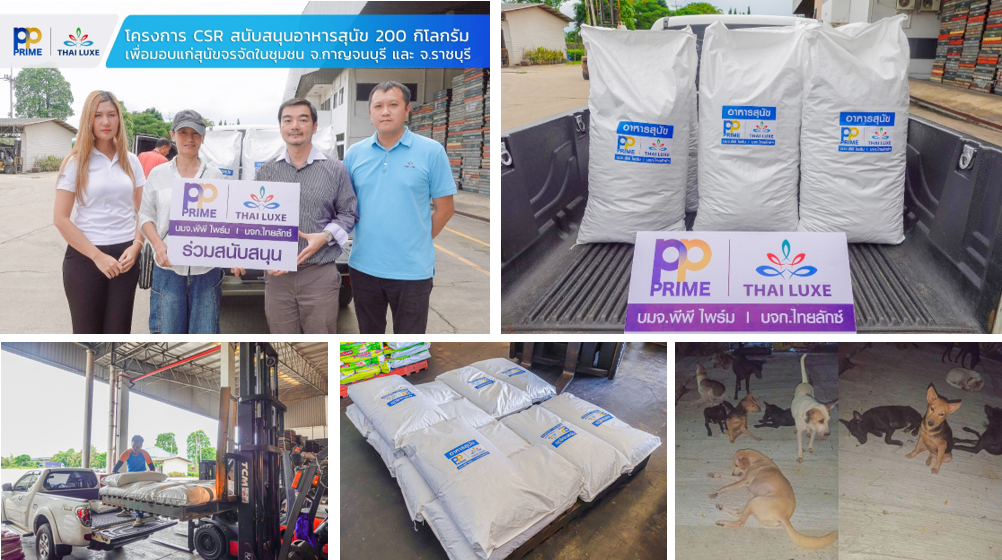
Quarter 3 | Jul 2025 | Donating 200 kg of Pet Food to Support Stray Dogs in Underprivileged Communities. | Support stray animal welfare and improve quality of life for animals in impoverished areas |
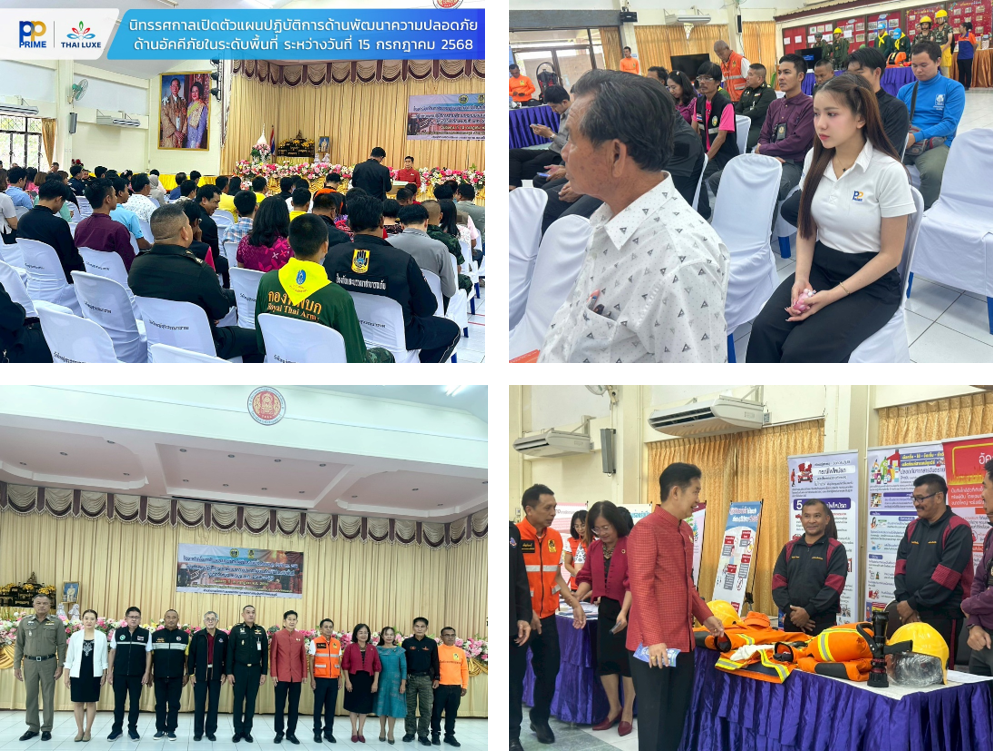
Jul 2025 | Participation in the Launch of the Local Fire Safety Development Action Plan. | Enhance safety standards within the organization and the surrounding community | |
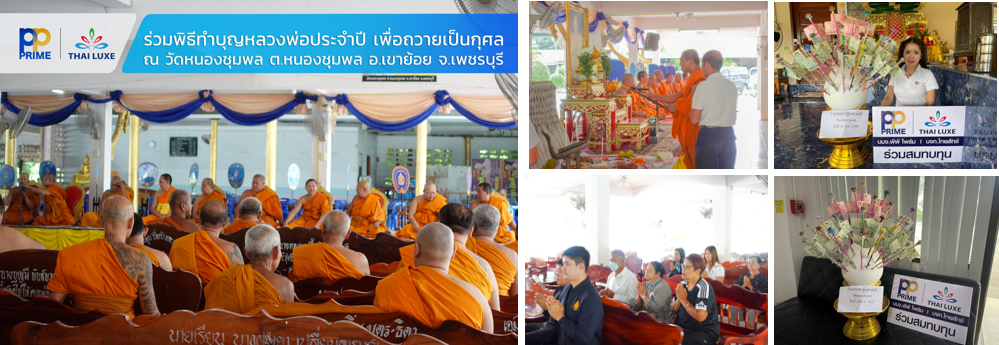
Quarter 4 | Oct 2025 | Financial Contribution to the Annual Kathin Unity Ceremony at Wat Nong Chumphon, Khao Yoi, Phetchaburi. | Support and sustain religious activities and institutions |
Nov 2025 | Participating in the 2025 Annual Merit-Making Ceremony at the Local Temple. | Promote cultural and religious traditions | |
All time | 2025 | Prioritizing Local Recruitment and Employment in Areas of Operation. | Distribute income to the community and support local economic growth |
2025 | Zero-Discharge Wastewater Management: 100% Internal Water Recycling and Reutilization. | Mitigate and reduce environmental impact | |
Plan Areas
| Plan Area | Other — Please Specify |
|---|---|
| Employment and professional skill development | |
| Education | |
| Religion and culture | |
| Forests and natural resources | |
| Occupational health, safety, health, and quality of life | |
| Disadvantaged and vulnerable groups | |
| Water and sanitation management | |
| Others | Community engagement in various aspects |
Community & Social — Targets
Has Set Community & Social Targets
Yes
Targets
| Indicator | Target Areas | Base Year | Base Year — Description | Target Year | Target Year — Description |
|---|---|---|---|---|---|
| The implementation of Corporate Social Responsibility (CSR) and community relations projects/activities targeting key stakeholders, both internal and external, through public relations (PR) dissemination via various online and offline channels. | 3036 · Description: Employment and professional skill development · 3037 · Description: Education · 3038 · Description: Religion and culture · 3041 · Description: Occupational health, safety, health, and quality of life · 3042 · Description: Disadvantaged and vulnerable groups · 3043 · Description: Water and sanitation management · 3044 · Description: Reducing inequality | 2,025 | The number of activities/projects/participation must increase by at least 10% per quarter. | 2,025 | Community and Social Management: 2025 Target Details
The Company has established Quality Objectives (KPIs) and activities related to Social and Community Responsibility for the year 2025 as follows:
Implementation of CSR Projects, Activities, and Community Engagement:
Executing Corporate Social Responsibility (CSR) and community relations initiatives for both internal and external key stakeholders. This includes comprehensive Public Relations (PR) efforts across multiple channels, encompassing both Online and Offline platforms.
Quarterly Performance Targets (2025):
Quarter 1: 13.70%
Quarter 2: 40.30%
Quarter 3: 26.87%
Quarter 4: 11.43%
Total Annual Target 2025: 23.08% |
Community & Social — Performance & Outcomes
Has Performance Results
Yes
Performance Description
Corporate Social Responsibility (CSR) & Community Engagement 2025
"Happy Kids with Kind Hearts" Project 2025: Collaboration with the community to provide gifts and scholarships on National Children’s Day.
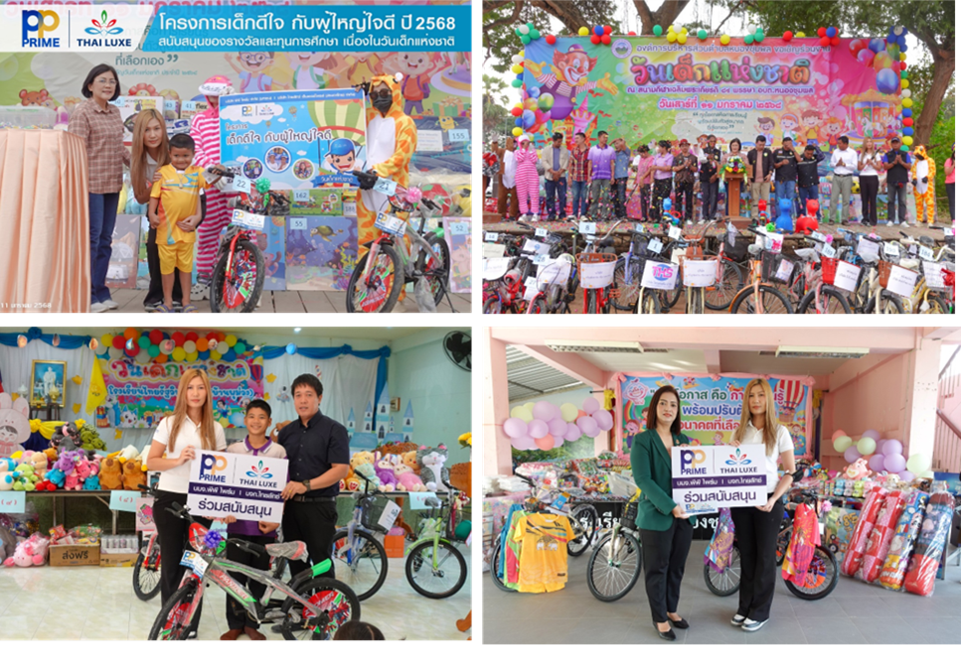
PP Prime - Thai Luxe Scholar Program 2025: Awarding academic scholarships to local students and children of employees.
Providing financial sponsorship for the "Mon Rak Nong Chumphon" community event organized by the Nong Chumphon Subdistrict Administrative Organization (SAO), Khao Yoi, Phetchaburi.
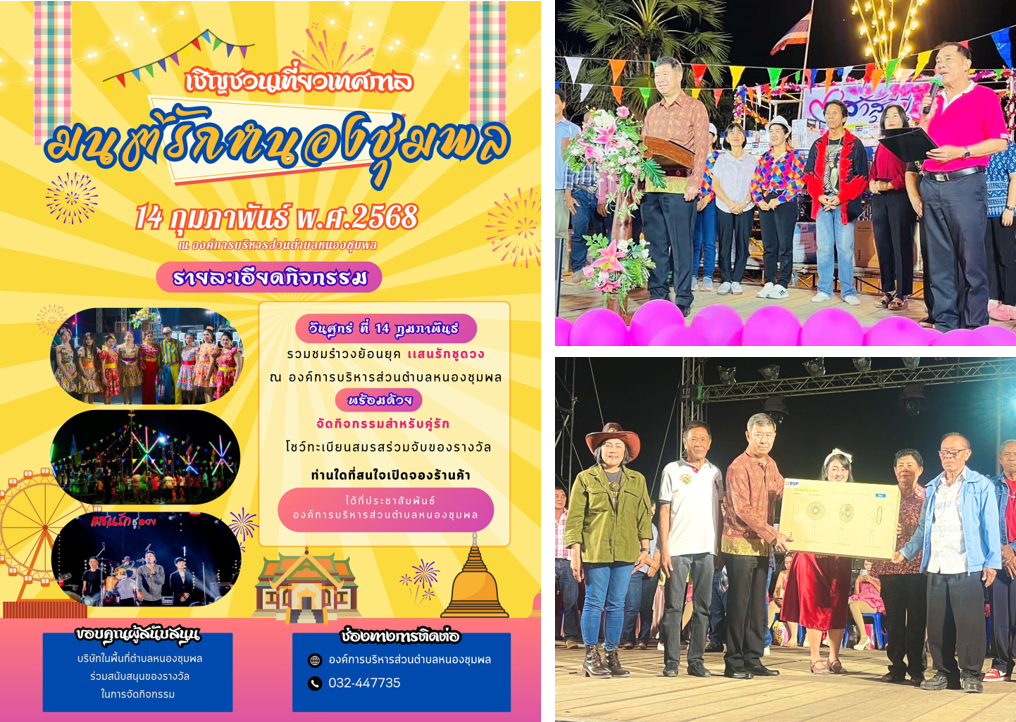
Supporting the New Year celebration for Community Moo 2, Nong Chumphon, Phetchaburi, to foster local harmony.

Financial Sponsorship for the Red Cross Charity Raffle at the 38th Phra Nakhon Khiri Fair 2025, Phetchaburi Province.
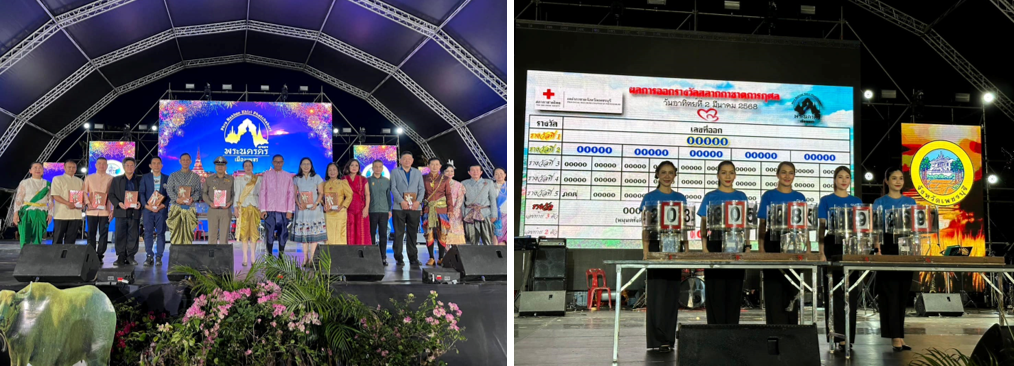
Proactive Fire Prevention and Surveillance Measures during the Songkran Festival.
Blood Donation Drive and Sponsorship of National Labor Day Activities in Phetchaburi Province.
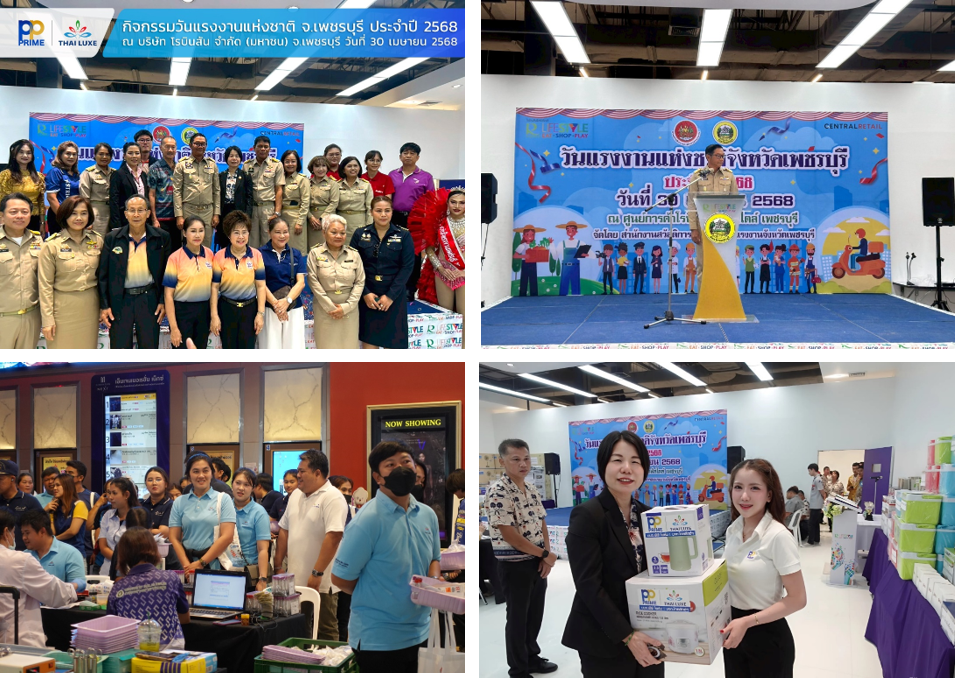
Donating 200 kg of Pet Food to Support Stray Dogs in Underprivileged Communities.
Participation in the Launch of the Local Fire Safety Development Action Plan.
Financial Contribution to the Annual Kathin Unity Ceremony at Wat Nong Chumphon, Khao Yoi, Phetchaburi.
Participating in the 2025 Annual Merit-Making Ceremony at the Local Temple.
Prioritizing Local Recruitment and Employment in Areas of Operation.
Zero-Discharge Wastewater Management: 100% Internal Water Recycling and Reutilization.
Awards and Recognition
For the fourth consecutive year (2022–2025), PP Prime Public Company Limited (PPPM) has been honored with the Sustainability Disclosure Acknowledgement award by the Thaipat Institute.
Law Violation Incidents
Law Violation Incidents
| Metric | Current Year | Previous Year | Two Years Ago |
|---|---|---|---|
| The total number of cases or incidents of significant violations of laws or regulations regarding social and human rights (Cases) | 0 | 0 | 0 |
| The total number of cases or incidents that cause significant labor disputes (Cases) | 0 | 0 | 0 |
| The total number of cases or complaints related to consumer rights violations (Cases) | 0 | 0 | 0 |
| The total number of cases or complaints related to partner rights violations (Cases) | 0 | 0 | 0 |
| The total number of cases or incidents that cause disputes with the community/society (Cases) | 0 | 0 | 0 |
| The total number of cases or incidents related to cyber security or customer data breaches (Cases) | 0 | 0 | 0 |
| The total number of cases or incidents related to safety and occupational health at work (Cases) | 0 | 0 | 0 |